
| After nearly three years of declining rents, the national self-storage market is finally showing signs of turning a corner. According to Yardi Matrix’s October 2025 National Self Storage Report, advertised rates in September rose 0.9% year-over-year, marking the first sustained improvement since 2022. |
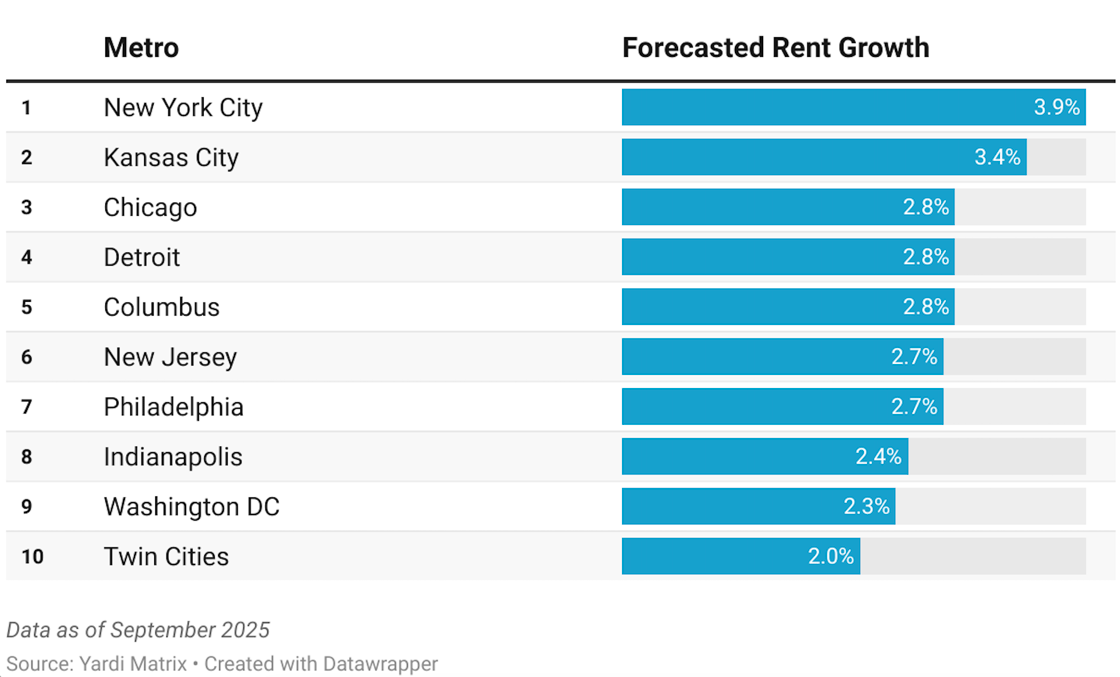
| National advertised rates averaged $16.80 per square foot, up from $16.65 a year ago. Institutional operators are leading the recovery, pushing same-store rents up 2.6% year-over-year, while independent operators—who had been flat for nearly three years—posted their first annual increase since late 2022. Climate-controlled units outperformed non-climate-controlled, rising 1.5% year-over-year versus 0.5% respectively. Midwest Showing Strength Markets in the Midwest are leading the rebound. Cities like Chicago, Minneapolis, Detroit, and Indianapolis posted some of the strongest year-over-year rate growth thanks to limited new supply and stronger multifamily fundamentals (a factor that heavily plays into self-storage demand). Yardi Matrix projects this trend to continue, with the chart below showing the top ten markets for forecasted rent growth. |
| Supply Pressures Easing The national construction pipeline continued to contract slightly in September. Yardi Matrix tracked 2.6% of existing inventory under construction, down from 2.7% the month before. While that may sound small, it still represents more than 52 million net rentable square feet underway nationwide. This construction moderation could help support pricing and occupancy levels continue to stabilize heading into 2026. Resilience in High-Supply Markets Perhaps most notably, Sarasota–Cape Coral defied expectations. Despite leading the nation in new supply, rents managed to tick up modestly year-over-year. Steady population growth and temporary hurricane-related demand seem to be helping to offset oversupply. What It Means for Operators and Investors These national trends mirror what many operators, including Open Door Capital, have seen over the past few years. Self storage operators have weathered rate compression, aggressive new supply, and shifting consumer demand. After a multi-year pullback, the data in Yardi’s latest report suggests the storage sector may be finding its footing again. Rent stabilization, moderating new supply, and increased consumer demand point toward a potentially more balanced operating environment heading into 2026. |